

The Rise of AI Video Generators, Generative AI Development, and Autonomous AI Agents

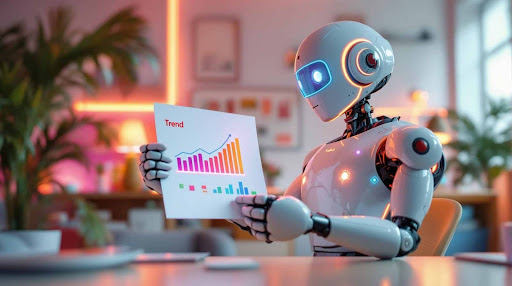
Highlights of the AI Landscape in 2025
- Democratization of Content Creation: AI video generators are making professional-quality video production accessible to everyone, regardless of technical skill or budget, through intuitive text-to-video capabilities and AI-driven editing.
- Sophisticated Generative AI: Beyond basic content generation, AI is evolving to provide advanced reasoning, multimodal integration, and enterprise-grade solutions, focusing on reducing hallucinations and enhancing reliability through techniques like Retrieval-Augmented Generation (RAG).
- Autonomous AI Agents Redefine Workflows: These intelligent systems are moving beyond simple task execution to independently plan, reason, and execute complex operations with minimal human intervention, automating everything from marketing to IT support.
The year 2025 marks a pivotal moment in the evolution of artificial intelligence, characterized by the widespread adoption and advanced development of AI video generators, sophisticated generative AI capabilities, and the emerging influence of autonomous AI agents. This confluence of technologies is not merely enhancing existing processes but fundamentally reshaping industries, making complex tasks simpler, and opening new avenues for creativity and efficiency. The focus has shifted from experimental applications to practical, scalable solutions that are driving significant transformations across various sectors.
The Transformative Power of AI Video Generators
Democratizing Visual Storytelling for Everyone
AI video generators have become a cornerstone of content creation in 2025, offering unprecedented accessibility and efficiency. These tools empower individuals and organizations to produce high-quality video content without the need for extensive filming equipment, specialized skills, or large budgets. The core innovation lies in their ability to translate text, images, or even basic video clips into polished, dynamic visual narratives.
Key Advancements and Capabilities
- Text-to-Video Generation: Users can now simply input a script or descriptive text, and the AI will generate a complete video, including visuals, dialogue, and even music. This eliminates traditional production bottlenecks and significantly speeds up content creation.
- Realistic AI Avatars and Digital Humans: Highly lifelike avatars with precise lip-sync and nuanced facial expressions are being used as virtual presenters, brand ambassadors, and content creators. These digital humans are becoming increasingly indistinguishable from real individuals, complete with 3D physics simulations for realistic motion and fabric dynamics.
- Hyper-Personalization at Scale: AI allows for the creation of tailored video content for individual viewers. This includes localized language versions, adaptive content pacing, and even dynamic elements that respond to viewer feedback, leading to higher engagement and improved return on investment.
- Automated Editing and Post-Production: AI automates routine tasks such as cutting, trimming, and scene selection. Beyond basic automation, these tools now support advanced creative controls like dynamic camera movements and seamless scene transitions, making professional-grade editing accessible to all.
- Integration with Workflows: Modern AI video tools integrate seamlessly with existing marketing, social media, and broadcasting platforms, enabling real-time content generation and distribution. This facilitates marketing automation, dynamic broadcasting, and streamlined content pipelines.

Leading Platforms and Market Trends
The market for AI video generators is experiencing robust growth, with projections indicating a significant increase in value. Platforms such as Runway, InVideo, Synthesia, HeyGen, Pika, and Kling AI are at the forefront, each offering specialized features catering to diverse needs, from marketing and education to social media and entertainment. These tools continue to push boundaries, with improvements in photorealism, directorial control, multilingual support, and high-definition output (up to 1080p) becoming standard. The shift in creative workflows is notable; AI is becoming the central engine for content creation, moving from manual linear processes to more adaptive, prompt-driven methods. This has made “prompt engineering” a vital skill for creators.
The Evolution of Generative AI Development
Beyond Creation: Towards Reasoning and Enterprise Integration
Generative AI development in 2025 has moved beyond mere content generation to focus on scalable models that exhibit enhanced reasoning, multimodal capabilities, and practical enterprise deployment. The technology is rapidly transitioning from a novel concept to a mainstream business tool, widely adopted for content creation, strategic marketing, and automated customer service.
Core Developments and Frameworks
- Focus on AI Reasoning: A significant trend is the emphasis on grounding generative AI outputs in real enterprise data to reduce hallucinations and improve reliability. Retrieval-Augmented Generation (RAG) is a common approach that combines search capabilities with generative models to ensure accuracy and relevance.
- Custom Silicon and Multimodal Data Integration: Advances in hardware and sophisticated integration systems allow for more efficient processing and the seamless combination of various data types (text, images, audio, video).
- Frameworks for Scalability: Developers are leveraging frameworks like Hugging Face Transformers and LangChain for rapid prototyping and deployment of generative AI solutions. The choice of models, from versatile options like ChatGPT to specialized ones like Claude 3.5 for ethical reasoning or Gemini for multimodal tasks, depends on specific application needs, often balancing performance with compute costs.
- Efficient and Sustainable Models: There’s a growing focus on optimizing models for sustainability, with techniques like quantization reducing energy consumption and enabling more cost-efficient deployment.

Enterprise Adoption and Ethical Considerations
Businesses are increasingly seeing tangible ROI from generative AI as solutions scale from pilots to broader deployments. Governance and measurement have become central to successful adoption strategies. While the speed of innovation is remarkable, challenges such as model hallucinations remain areas of active research and development. At the same time, organizations are also enhancing their digital presence through Custom Web Development Services, leveraging modern, custom website design practices to create more intuitive, engaging, and trustworthy user experiences. Ethical considerations—including bias detection and transparent AI use—are integrated into development workflows to maintain trust and ensure responsible deployment.
The Interconnected Future: Synergy Across AI Domains
How AI Technologies Converge for Greater Impact
The true power of AI in 2025 lies in the synergy between these different domains. AI video generators benefit from advancements in generative AI, which in turn can be orchestrated by autonomous agents. This interconnectedness allows for even more sophisticated and automated workflows.
For example, an autonomous agent could be tasked with analyzing market trends, then use generative AI to draft a marketing campaign script, and finally leverage an AI video generator to produce personalized video ads, all with minimal human oversight. This holistic approach unlocks unprecedented levels of efficiency and creative potential.
You NEED to Learn AI Automation Now (Full Beginners Guide 2025)
Conclusion
The year 2025 represents a landmark period for AI, marked by the maturity and widespread application of AI video generators, advanced generative AI development, and the transformative emergence of autonomous AI agents. These technologies are not just tools but foundational shifts that are democratizing content creation, enhancing intelligent reasoning, and automating complex workflows. As AI continues to evolve, understanding and strategically integrating these advancements will be crucial for innovation, efficiency, and maintaining a competitive edge across all sectors.