


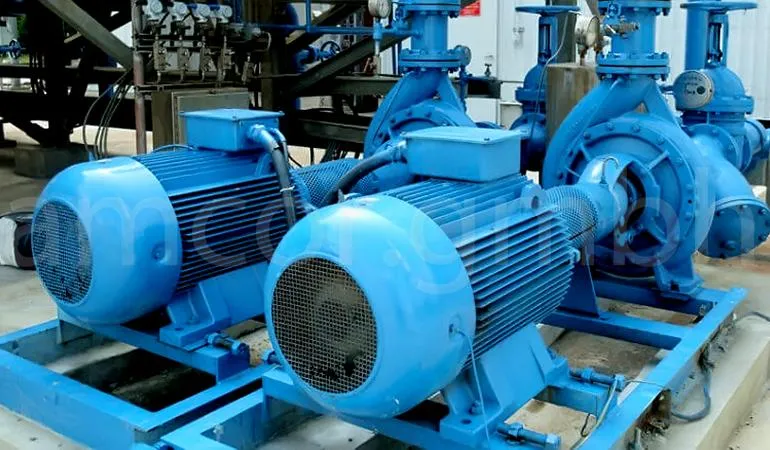
In the petrochemical sector, even a minor pump failure can cascade into major losses. That’s why specifying petrol chemical pumps (petrochemical pumps) demands exceptional design, material choices, and foresight. Reliability is not optional—it’s the baseline expectation for operations, safety, and margins.
Plant engineers, maintenance leads, and procurement teams operate under constant pressure. Downtime, leaks, corrosion, and vibration all erode profitability. This article lays out how to design petrochemical pumps to survive extreme duty: high temperature, corrosive fluids, high pressures, and shifting attack modes.
Understanding the Stakes in Petrochemical Pumping
Petrochemical processes expose pumps to unique challenges not found in simpler chemical plants.
- High temperature hydrocarbons, vapors, heavy fluids, mixed phases
- Corrosive impurities (sulphur, chlorides, H₂S, water)
- High differential pressures and multiphase interfaces
- Safety and environmental consequences of leaks
Because of these stressors, pumps in petrochemical plants must be overspecified in almost every aspect.
Typical Failures That Demand Design Attention
- Seal leakage during high vapor phases
- Casing creep under thermal cycles
- Material embrittlement or sulfide stress cracking
- Erosion by particulate contaminants
- Fatigue from startup/shutdown cycles
You must design the pump so resists all of these under your duty conditions.
Key Design Attributes for Extreme Reliability
When building pumps for petrochemical service, design choices dominate longevity. Small mistakes in geometry or clearance amplify under harsh service.
- Oversized casing wall thickness to resist pressure and creep
- Balanced impeller geometry to minimize radial loads
- Optimized flow paths to reduce turbulence-induced erosion
- Safety margin for operating beyond nominal conditions
Critical Design Considerations
- Use double volute or split-casing geometry in high differential cases
- Balance radial and thrust loads to protect bearings
- Include hydrodynamic guidance vanes when fluid dynamics demand
- Provide recirculation paths or backflow relief to avoid stagnation
A pump built to mediocre design will fail early under petrochemical stresses.
Material & Corrosion Engineering
Material selection is often the decisive factor in pump life in petrochemical service. The environment is harsh: mixtures of solvents, water, sulfur compounds, acids, chlorides.
- Use high alloys (Duplex, Super Duplex, Ni alloys) when sulfur or chloride exposure is expected
- Consider lined or cladded components when cost prohibits full alloy use
- Select metallurgical heat treatments and surface finishes carefully
Matching Material to Fluid Profile
- For sour hydrocarbons: prioritize sulfide stress cracking resistance
- For chloride-laden waters: favor pitting resistance
- For mixed solvents: ensure material compatibility (e.g. resistance to swelling, permeability)
If material mismatches occur, even flawless design cannot save the pump.
Seal Systems: Keeping the Process Contained
Seals are one of the most vulnerable parts of a petrochemical pump. Given the fluids, vapors, and pressures, the seal must be chosen carefully.
- Use double mechanical seals with buffer or barrier fluid in high-risk application
- Select flush plans or quench lines to cool or back-pressurize seal zones
- Consider cartridge seals for easier servicing
- In some cases, magnetic drive or canned motor options eliminate seals altogether
Best Seal Strategies Under Extreme Conditions
- Barrier fluid loops with controlled pressure
- Balanced seal designs to reduce net forces
- Seal support systems (coolers, pressure control, purge)
- Monitoring for seal leakage and early replacement scheduling
Well-engineered seals can prevent one of the most common failure modes in petrochemical service.
Hydraulic Efficiency & Performance Under Stress
Efficiency is more critical in petrochemical plants, where energy costs and throughput matter. But efficiency must survive harsh conditions.
- Design clearances to balance leakage vs wear tolerance
- Optimize impeller vane geometry for performance and robustness
- Account for variations in viscosity, temperature, vapor content
Diagnosing Performance Drift
- Efficiency drift over time often signals seal or wear ring degradation
- If head drops but flow remains, internal leakage may be rising
- Rising power consumption at same flow suggests internal losses
Continuous performance testing helps you catch creeping inefficiency before it accelerates failure.
Vibration, Alignment & Mechanical Integrity
Even a well‑designed pump fails quickly if its mechanical execution is poor in the field.
- Use rigid foundations and proper anchoring
- Ensure precise alignment between motor and pump to avoid shaft stress
- Use vibration dampening and isolation where needed
- Employ sensors to track vibration and deviation over time
Common Mechanical Pitfalls
- Loose foundation bolts leading to structural fatigue
- Coupling misalignment stresses bearings
- Resonance from nearby piping or external systems
- Undetected bearing wear, allowing shaft runout
Mechanical integrity is the frame on which your pump design must stand.
Thermal Design & Expansion Control
Petrochemical pumps often deal with high temperature fluids. Thermal expansion, differential expansion, and temperature cycling can wreak havoc.
- Design for thermal expansion: floating seals, expansion joints, flexible couplings
- Use appropriate materials for high-temperature service
- Allow for differential growth between rotor and casing
Mitigating Thermal Stress Issues
- Include bellows, floating elements, or thermal sleeves
- Pre‑heating or gradual ramping during startup
- Maintain coolant or jacket circulation where required
Neglect thermal management, and your pump will distort, leak, or bind.
Maintenance, Monitoring & Lifecycle Planning
In petrochemical service, preventive maintenance and monitoring are vital to avoid unplanned breakdowns.
- Use condition monitoring: vibration, temperature, seal leakage trends
- Schedule rebuild or refresh intervals before catastrophic failure
- Maintain spare critical internals (impellers, seals, liners) in inventory
- Use root-cause analysis on any failure to improve the next design
Metrics to Track Over Service Life
- MTBF (mean time between failures)
- Wear rates on liners, impellers
- Seal leakage trends
- Power and efficiency drift
A proactive maintenance regimen turns a pump into a long-term asset, not a recurring liability.
When to Retrofit vs Replace
Over time, process changes or wear may require you to evaluate whether to retrofit or fully replace a pump.
- Retrofit impellers or liners to recover lost performance
- Upgrade seals or mechanical systems to newer standards
- If foundational wear or casing distortion exists, full replacement may be safer
Decision Criteria
- Cost of retrofit vs new unit with margin
- Downtime cost and scheduling constraints
- Risk of failure if patched
A well-evaluated retrofit can stretch life; a weak patch costs more when failure returns.
Future Trends in Petrochemical Pump Design
Pumps for petrochemical operations are also evolving. New technologies help with reliability, monitoring, and efficiency.
- Embedded sensors for real-time monitoring of wear or imbalance
- Smart sealing systems that adjust to changing pressures or temperatures
- Advanced coatings and surface engineering to resist corrosion and erosion
- Adaptive or variable geometry internals to suit changing feed conditions
What Next‑Gen Pumps Bring
- Predictive alerting before damage becomes irreversible
- Longer maintenance intervals
- Lower risk from upsets or feed variation
- Better integration with plant control systems
These advances let pumps behave not just as mechanical devices, but as dynamic guardians of process continuity.
Conclusion
In petrochemical environments, pumps must do more than move fluid—they must resist abuse, maintain purity, survive thermal extremes, and never interrupt production. Specifying a robust petrol chemical pump (petrochemical pump) includes rigorous attention to hydraulics, materials, seals, mechanical integrity, thermal control, and maintenance.
When you treat your process pumps as long-term system instruments—not expendable commodities—you ensure safer operations, lower life-cycle costs, and fewer surprises. Use the principles above as your design, procurement, and reliability checklist. Then your pumps won’t just run—they will endure.