
How Real-Time Logistics Tracking Apps in India Are Redefining Efficiency, Visibility & Customer Trust

There was a time when logistics updates used to come through endless phone calls, numerous scattered spreadsheets, along with “on-the-way” promises that really meant little without proof. But nowadays, that simply doesn’t work. Customers expect precision, businesses truly need efficiency, and delays have an impact on revenue.
That’s exactly where real-time logistics tracking apps in India step in. It offers live shipment visibility, smarter fleet coordination, along with data in real-time. You just think of it like upgrading from a paper map to a live navigation system.
In his blog, we’ll explore how exactly these applications are transforming India’s logistics, the real business impact they actually deliver, and various challenges that companies face, and what the future of tech-driven logistics looks like.
What Are Real-Time Logistics Tracking Apps in India?
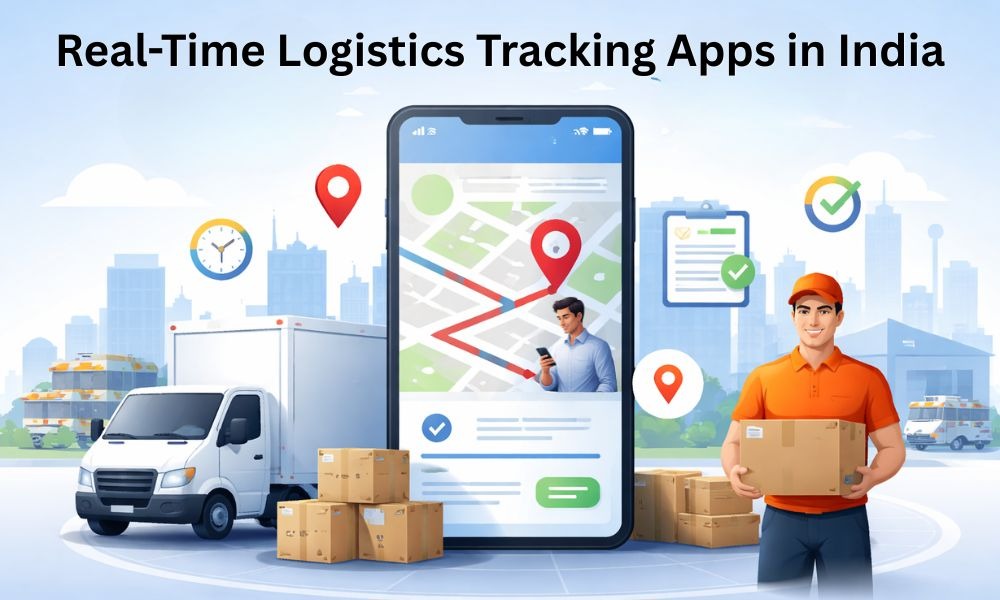
Real-time logistics tracking apps are actually digital platforms designed in order to give businesses comprehensive visibility over their transportation and delivery operations. These apps track vehicles, shipments, along with orders in real time through GPS and cloud technology. They help logistics teams perfectly monitor routes, predict delays, and manage fleets efficiently, while providing customers with accurate delivery updates; all from a centralized dashboard accessible via mobile or even web.
- Definition & Core Functionality
Provide live vehicle and shipment tracking, accurate ETAs, and automated delay alerts, route monitoring, as well as digital proof of delivery updates.
- GPS, IoT & Cloud Integration
Utilize GPS devices, IoT sensors, and cloud platforms in order to collect, process, store, and display real-time logistics data securely.
- Fleet Tracking Apps vs Shipment Tracking Software India
Fleet tracking apps monitor vehicles and drivers, and shipment tracking software primarily focuses on parcel-level visibility and customer updates.
- Real-Time Data Synchronization & API Integrations
Integrate with ERP, CRM, as well as warehouse systems through API in order to enable seamless data flow and automated status updates.
The Indian Logistics Boom: Why Real-Time Visibility Matters Now
Actually, India’s logistics industry isn’t exactly what it used to be. Fewer deliveries, wider reach, along with higher customer satisfaction are reshaping operations. Below, we explore the key reasons that drive this shift and why smarter digital systems are essential:
- Growth of India’s Logistics & Supply Chain Sector
India’s logistics industry is expanding rapidly due to infrastructure upgrades, organized warehousing, and policy reforms. As networks grow more complex, businesses are turning to supply chain tech in India to improve coordination, reduce costs, and increase operational agility.
- E-Commerce Surge & Hyperlocal Demand
The expectations of logistics are also reshaped due to e-commerce and instant delivery models, same-day shipping, hyper-local fulfilment, and D2C brands need digital logistics solutions that allow live tracking, route optimization, and precise latest appearance
- Tier-2 & Tier-3 Expansion Challenges
Companies are now expanding beyond metro cities, which face inconsistent infrastructure, longer routes, as well as limited on-ground visibility. Real-time tracking systems help businesses perfectly maintain service quality, optimize fuel usage, and manage disturbances even more effectively.
- Increasing Demand for Delivery Transparency
Modern customers expect live shipment updates, accurate EATs, along with proactive delay notifications. Real-time visibility builds trust, lessens support inquiries, and also enhances brand credibility in a competitive logistics and supply chain environment.
Key Features That Are Transforming Logistics Operations
Modern logistics is no longer just about moving goods from Point A to Point B. Beyond that, it’s also about visibility, control, efficiency, and data-driven decision-making. Here’s how advanced logistics technologies are reshaping operations and creating measurable business value:
1. Real-Time GPS Tracking
Real-time GPS tracking provides full visibility of vehicles, shipments, and fleet movements at every stage of transit. Logistic managers can track routes, identify delays immediately, and make decisions quickly. Now, this reduces theft, minimizes idle time, improves overall accountability, and enhances trust of customers through transparent tracking.
Value Delivered:
- Improved fleet utilization
- Reduced fuel and operational costs
- Enhanced shipment security
- Better customer satisfaction
2. Live ETA & Smart Alerts
Dynamic Estimated Time of Arrival (ETA) systems utilize live traffic, weather data, as well as route conditions in order to give accurate delivery timelines. Smart alerts notify managers and customers regarding delays, route deviations, or even unexpected stoppages in real time.
Value Delivered:
- Fewer customer complaints
- Proactive delay management
- Increased delivery reliability
- Stronger brand credibility
3. Geo-Fencing & Route Optimization
Geo-fencing actually creates boundaries virtually just to monitor when vehicles enter or exit specific locations like warehouses or delivery zones. The route optimization algorithm suggests the shortest, fastest, and most fuel-efficient routes according to real-time conditions.
Value Delivered:
- Reduced fuel consumption
- Faster delivery cycles
- Controlled unauthorized movements
- Lower logistics overhead
4. Driver Behavior Analytics
Advanced telematic systems track driving patterns like harsh braking, overspeeding, excessive idling, and even sudden acceleration. The best use? Businesses can use this data to improve their safety standards, reduce accident risks, and lower costs for maintenance.
Value Delivered:
- Safer fleet operations
- Reduced insurance premiums
- Lower vehicle wear and tear
- Improved driver performance
5. Integration with ERP & TMS Systems
Integration with ERP (Enterprise Resource Planning) and TMS (Transportation Management Systems) ensures seamless data flow between inventory, dispatch, billing, and fleet monitoring systems. Now, this eliminates manual errors and improves operational coordination.
Value Delivered:
- Real-time inventory visibility
- Faster invoicing and billing
- Reduced manual work
- Data-driven planning
6. AI-Powered Predictive Logistics Insights
Artificial Intelligence analyzes historical data to predict delivery delays, demand fluctuations, vehicle maintenance needs, and route risks. Predictive insights help businesses plan better and prevent disruptions before they occur.
Artificial intelligence analyzes historical data for predicting delivery delays,
Value Delivered:
- Proactive decision-making
- Reduced downtime
- Optimized resource allocation
- Higher operational efficiency
Why Businesses Need the Right Technology Partner
Logistics is no longer just about moving goods from one place to another. Fleets, warehouses, deliveries, along with customer expectations, are also becoming more complex every day. Off-the-shelf tracking software can’t solve all these challenges. Partnering with the right app development company in India helps businesses go beyond basic tools by building customized and scalable logistics solutions. The right tech partner understands your operations, identifies gaps, and creates a system that actually works for your business.
How the Right Partner Makes a Difference:
- Custom Solutions for Real Challenges: Develop tracking fleet systems that fit your routes, warehouses, and delivery models perfectly.
- Unified Operations: Connect vehicles, shipments, ERP, as well as customer portals, so that flows in real time without even any gaps.
- Smarter Decisions: Turn live data into insights, predict delays, optimize routes, and plan resources efficiently.
- Scalable Growth: Add new fleets, expand to several new cities, and handle multiple buses with no disrupting operations.
- Customer Confidence: Offer live tracking, accurate ETAs, and instant updates, and make deliveries even more reliable and transparent.
How Mypcot Infotech Enables Smarter Real-Time Logistics Solutions
Nowadays, handling logistics is far more than tracking shipments. Actually, it’s about having complete visibility, making faster decisions, and turning data into action. That’s exactly where Mypcot Infotech comes in. Rather than generic software, they develop custom, scalable, and integrated real-time logistics solutions that help businesses optimize fleets, track deliveries, and stay ahead in an increasingly competitive market.
- Custom Tracking Solutions
- Build fleet tracking apps that give live visibility across vehicles.
- Develop shipment tracking software personalized to operational requirements.
- Create cloud-based dashboards for centralized control.
- AI & Analytics
- Predictive route optimization to cut costs and delays
- Fleet performance analytics for smarter decision-making
- Real-time operational intelligence across deliveries
- Seamless Integration
- Integrate with ERP, CRM, and warehouse systems
- Enable real-time data sync via APIs
- Access through mobile and web platforms for teams and customers
- Industry-Focused Solutions
- Tailored for 3PL providers, eCommerce platforms, and last-mile delivery startups
Conclusion
Efficiency, transparency, and actionable insights are really no longer optional in logistics. But they are the backbone of successful operations. Real-time logistics tracking apps in India give businesses the tools in order to monitor fleet, optimize delivery routes, respond immediately to challenges, and turn complex supply chains into manageable and data-driven operations.
By partnering with Mypcot Infotech, companies gain custom, scalable, and fully integrated solutions that streamline operations, reduce errors, and enhance delivery performance. With Mypcot Infotech, tracking truly becomes more than software.
Over and above that, it becomes a strategic advantage that improves efficiency, builds customer trust, and drives sustainable growth in India’s competitive logistics market.