


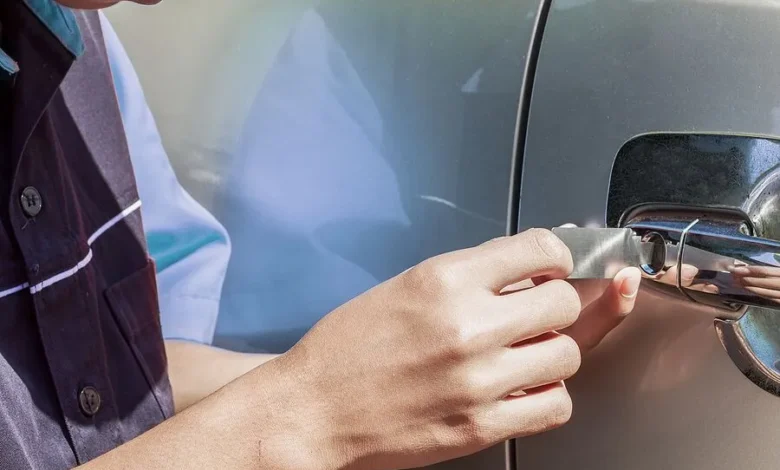
Getting locked out of your car, losing keys, or facing a broken ignition is stressful — especially when you’re on a schedule. Hiring an auto locksmith in Exeter (or any city) is usually the fastest, safest way to get back on the road. This guide explains, in straightforward terms, what services an auto locksmith provides, how they work, what you should expect during a call-out, how much it typically costs, and how to choose a trustworthy professional. By the time you finish reading you’ll know how to handle a vehicle lock or key problem confidently.
Common services an auto locksmith offers
Auto locksmiths do far more than simply open locked doors. Typical services include:
- Emergency lockout assistance — getting you back in when keys are locked inside or lost.
- Key cutting and replacement — cutting plain keys, transponder keys, remote fobs, and laser-cut keys.
- Transponder programming — reprogramming or cloning immobiliser/transponder keys.
- Fob repair & replacement — battery changes, button repairs, or full fob replacement.
- Ignition repair or replacement — fixing jammed or broken ignitions and replacing ignition cylinders.
- Broken key extraction — removing broken key fragments from locks or ignitions.
- Car key duplication — making a spare key while you wait.
- Security upgrades — fitting steering locks, aftermarket immobilisers, and advice on vehicle security.
Knowing which of these you need (or suspect you need) helps the locksmith bring the right tools and replacement parts on the first visit. Auto Locksmith Exeter services are commonly provided by DB Car Keys to help drivers deal with lockouts, lost keys, and key programming issues.
What to expect when you call
- Initial phone triage
The locksmith will ask for details: vehicle make, model and year, exactly what happened (lost keys, key broken, fob not working, locked keys in car), and your location in Exeter. Be ready to describe the problem clearly and to provide proof of ownership when asked. - Identity and ownership checks
To prevent theft, reputable locksmiths will ask for ID and proof of ownership (V5C, insurance documents, or a photo of keys in some cases). This is normal and a good sign — responsible companies protect both you and themselves. - ETA and price estimate
Expect a clear estimated time of arrival (often 20–60 minutes depending on traffic and the locksmith’s schedule) and a basic price range for the job. The locksmith should state whether the initial quote is fixed or an estimate that could change after they inspect the vehicle. - On-site assessment
When they arrive, they’ll inspect the car and confirm the method to solve it. For example, simple lockouts can often be resolved without damage; an old ignition problem might require cylinder replacement. - Work and payment
Work is usually done on-site. Most mobile locksmiths accept cash and card payments. You should receive a receipt detailing the work and parts provided, and information about any warranty.
Typical cost expectations
Costs vary widely by problem complexity, vehicle type (modern keyless cars cost more), and time (emergency call-outs outside business hours are pricier). As a rough guide:
- Simple lockout (non-electronic) — lower cost; often a base call-out fee + small labour (cheaper during business hours).
- Transponder key or fob replacement — higher: cutting + programming of electronic keys can be the most expensive single item.
- Ignition repairs / broken key extraction — mid-to-high, depending on complexity and whether parts must be replaced.
A good locksmith will explain the pricing components: call-out fee, labour time, parts, and any emergency surcharge. Always ask whether the price quoted includes VAT and parts.
How long will it take?
Times depend on the task:
- Lockout (non-electronic) — often 5–30 minutes.
- Key cutting (simple) — 10–20 minutes.
- Transponder programming & fob replacement — 20–60 minutes (sometimes longer if parts must be ordered).
- Ignition replacement or complex jobs — can take 1–3 hours or more.
These are general ranges; the locksmith should give an estimate at the start.
What to have ready when they arrive
- Photo ID (driver’s licence or passport).
- Proof of vehicle ownership (V5C logbook, insurance document, or vehicle registration and a photo ID).
- If available, the make/model/year of your car and any information about your current key (transponder, remote, smart key).
- A charged phone to receive communications or to show digital proof.
Having these ready speeds up verification and gets the job done faster.
Safety, quality and credentials
- Licensing & insurance: In the UK, locksmiths don’t need a universal national licence, but professional locksmiths are usually insured and members of trade associations (e.g., Master Locksmiths Association). Ask about insurance and membership — it’s a positive sign.
- Warranties: Ask if there’s a warranty on parts and labour (90 days, 6 months, or 12 months are common depending on the part).
- Damage-free guarantees: Reputable locksmiths aim to avoid damage. If a repair will require removing panels or causing cosmetic changes (e.g., ignition replacement), they should explain this beforehand.
- Reviews & reputation: Quick online checks (reviews, Google business listing, or local recommendations) can confirm reliability. If you called from a listing, the presence of multiple positive reviews is reassuring.
Red flags — what to watch out for
- No identification or business details: Legit companies provide a business name, vehicle registration, and ID.
- Insist on cash only: Many reputable locksmiths accept cards. A cash-only demand can be suspicious.
- Unrealistically low quotes: Lowball offers that change when the locksmith arrives are suspicious. Ask for a breakdown in writing if possible.
- Refusal of ID/ownership checks: A locksmith that won’t verify ownership is a risk to you and others.
Questions to ask the locksmith before they start
- What’s the total price (including call-out fee, labour, parts)?
- Do you have ID, registration, and insurance?
- Will this method damage my car? If so, how will you minimise or fix it?
- Do replacements (keys/fobs/ignitions) come with a warranty?
- How long will the work take?
- Can you program my car’s key/fob on-site?
Preventive tips to avoid future problems
- Have at least one physical spare key and keep it in a safe place — not inside the vehicle.
- Get a duplicate when you buy a new car or receive a new electronic key/fob.
- Label keys discreetly but avoid obvious tags that state “LOST KEY” or your address.
- Keep emergency numbers for a trusted local locksmith saved in your phone.
- Consider vehicle tracking and remote immobiliser services if theft is a concern.
Final checklist (quick)
- Ask for ID and proof of ownership.
- Get an ETA and a price estimate before they arrive.
- Ask about damage risk and warranty.
- Keep the receipt and any work documentation.
- Save the locksmith’s contact if you’re satisfied.
Closing thoughts
Hiring an auto locksmith in Exeter should be a smooth, professional experience that gets you back on the road quickly and safely. The best locksmiths are transparent about costs, verify ownership to protect you, and perform the work efficiently with minimal damage. If you take a few minutes to ask the right questions and choose a reputable provider, a car lock or key problem becomes an inconvenience — not a catastrophe.