

Introduction
Salt spray testing is one of the most common ways to determine corrosion resistance. It is used by many industries to test the behavior of materials under extreme conditions. A lot of moisture, salt, and heat are usually present here.
A salt spray test helps manufacturers predict the longevity of their products before they are actually used. The test is mostly used in automotive, aerospace, marine, construction, and metal finishing.
It has quick and trusted outcomes. The data helps engineers to enhance the quality of coating, material selection, and quality requirements. Appreciation of the way the test is conducted is important to achieve the correct outcome and adherence.
This article describes a salt spray test. It addresses its purpose, equipment, procedures, and best practices. It also identifies pitfalls and prevalent ways of interpretation.
Understanding the Purpose of Salt Spray Testing
The salt spray test is aimed at increasing corrosion. It applies materials under regulated conditions to a salty mist. This is a simulation of the exposure to corrosive conditions over a long period.
What is Salt Spray Testing is the question many people are asking and the answer is quite simple. It is a lab procedure that is applied to test the corrosion resistance. It assists in determining the flaws of the coating, paints and metals.
The test fails to replicate the conditions in the real world. Rather, it exposes the object to harsh conditions to accelerate corrosion. This enables comparison of materials faster.
It also promotes quality control and research. ASTM B117 and ISO 9227 standards give test parameters. These are standards that guarantee consistency and repeatability. It is important to follow them in order to get valid results.
Equipment and Materials Required for the Test
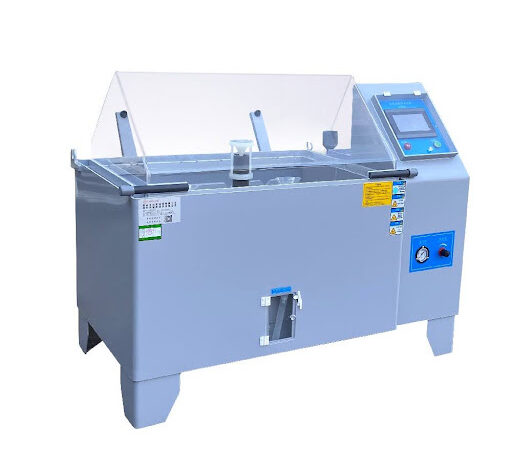
Testing of salt spray needs certain equipment. The salt spray chamber is the most crucial element. This room regulates temperature, moisture, and mist.
Other fundamental items include:
- Sodium chloride (NaCl) with high purity
- Deionized or distilled water
- pH measurement tools
- Sample holders and racks
- Collection funnels and cylinders
Salt solution is typically 5 percent in concentration. The PH should not be outside the specific range. Corrosion behavior can be influenced by any deviation.
Before testing, samples should be purified. Results can be distorted by oils, dirt, and fingerprints. Accuracy and repeatability is achieved through proper preparation.
Preparing Test Specimens Correctly
The preparation of the samples is very important in the testing of salt sprays. Poor preparation may ensure misleading results. Wash the specimens clean first. Use solvents or a weak detergent where necessary.
Do not scratch or scratch the surface. Secondly, check defects in samples. Thickness of record coating and condition of surface. This data is useful in the analysis. Mount the samples at an angle.
The majority of standards suggest 15- 30 degrees. This deters pooling of the solutions and provides equal exposure. Do not make samples come in contact with each other. Adequate spacing will provide equal exposure of mist. Name the specimens to prevent confusion.
Setting Up and Operating the Salt Spray Chamber
After preparation of samples, the chamber arrangement starts. The test should start by correctly calibrating. OTS Technik Salt Spray Test Chamber is usually applied in industrial laboratories. It offers an accurate control of temperature, spray pressure and fog distribution.
Test accuracy and repeatability are enhanced by quality equipment. Dilute the salt using distilled water. Adjust the pH if required. Fill the reservoir as per the manufacturing instructions.
Adjust the temperature of the chamber, typically to about 35°C. Control spray rate and air pressure. Collect check mogs to ensure that they meet the standards. The test should only be started when stable conditions have been reached. Monitoring must be done continuously.
Test Duration and Monitoring Procedures
The duration of salt spray tests may take a number of hours or even thousands of hours. The time is variable according to the test requirements and standards.
Common test intervals include:
- 24 hours
- 96 hours
- 240 hours
- 500+ hours
Measure major parameters during the test period. These are temperature, pH, and volume collected by the fog. Record data on a regular basis.
The chamber should not be opened regularly. This has the power to disrupt internal conditions. And should any inspection be necessary, make it short.
Record the signs of any visible corrosion. These can be rust, blistering, or failure of coating. The photographs aid in future analysis.
Evaluating Results and Avoiding Common Errors
Take samples out after the test. Wash them using a little water. Let them dry at room temperature. Assess Corrosion in line with the applicable standard.
Check on rust spots, coating delamination, or discoloration. When possible, use rating scales.
Avoid common mistakes such as:
- Extrapolating accelerated findings.
- Covering up flaws in preparation.
- Comparison of the results of various standards.
- Directly assume lifespan in the real world.
The salt spray test is not predictive but relative. It is effective when comparing coatings, under the same conditions.
Stability of documentation enhances credibility. Always have test conditions, time and evaluation criteria.
Final Thoughts
Salt spray test is a useful instrument in testing corrosion. It offers quick and quality-controlled material performance. When properly undertaken, it enhances product design and quality control.
It is imperative to know the purpose, equipment, and procedure. Accuracy is enhanced by careful preparation of samples and setting up of the chambers. Constant check-ups will make sure things are done right.
Although there are limitations concerning the test, it is still not disputed. Through proper use, it assists industries to minimise failure and enhance resilience.
With the best practices, salt spray testing emerges as an effective way of conducting corrosion testing, as well as the comparison of materials.